This material may not be published, broadcast, rewritten, or redistributed. ©2026 Twincitieslocalnews - local news, local sports

Thursday, November 19, 2026
By MN Newswire staff
Published: October 05, 2026 10:30am
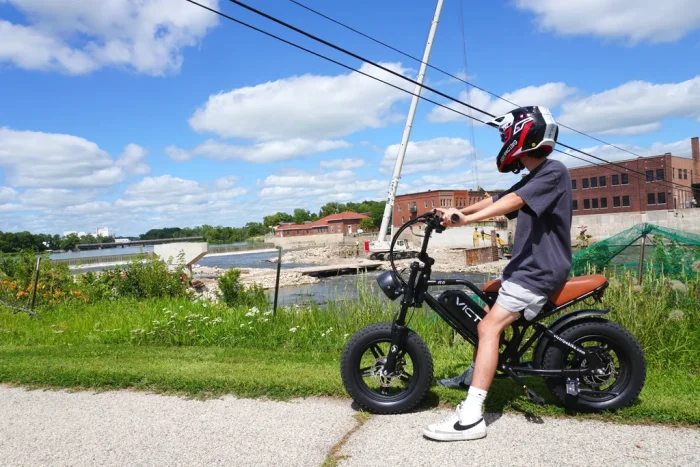
Electric bicycles continue to grow in popularity across Minnesota, but state officials are reminding riders that e-bikes are subject to specific rules governing who can operate them, where they can be ridden and what qualifies as a legal electric-assisted bicycle.
Under Minnesota law, a person must be at least 15 years old to operate an electric-assisted bicycle. E-bikes generally can be operated in many of the same places as traditional bicycles, including road shoulders, bicycle lanes and bicycle routes.
Minnesota divides legal electric-assisted bicycles into different classes based on how the motor operates and the maximum assisted speed. Legal e-bikes must meet state requirements, including limits on motor power and speed. Bikes that exceed those limits may instead fall under laws governing motorized bicycles, motorcycles or other motor vehicles.
The distinction has become increasingly important as faster electric motorcycles and so-called “e-motos” have appeared on Minnesota streets and trails. Some vehicles are marketed as e-bikes despite being capable of speeds or motor outputs beyond what Minnesota considers an electric-assisted bicycle.
State law generally allows Class 1 and Class 2 e-bikes to operate with their motors engaged on bicycle paths, bicycle trails and shared-use paths unless they are specifically prohibited. Class 3 and multiple-mode e-bikes may also be permitted, although local governments or state agencies responsible for a trail can prohibit their use. Local authorities also have authority to regulate e-bikes on certain natural-surface trails and bike parks.
Riders must follow applicable traffic laws while using public roads. The Minnesota Department of Transportation advises e-bike riders to obey traffic signs and signals, yield to pedestrians, travel at safe speeds and use additional caution on shared paths.
Equipment requirements also apply. Manufacturers and distributors must place a permanent label on an electric-assisted bicycle identifying information including its class, top assisted speed and motor wattage. Class 3 and multiple-mode e-bikes must also have a speedometer.
Minnesota lawmakers have also been considering additional safety regulations as e-bike use increases. Legislation considered during the 2026 session included a proposal requiring riders younger than 18 to wear protective headgear while operating an electric-assisted bicycle.
Safety concerns have grown alongside e-bike use. A serious 2024 crash in Hastings involving an underage e-bike rider and a pedestrian helped fuel calls for tighter local restrictions. Hastings later reduced e-bike speeds on city trails and prohibited e-bikes on sidewalks, according to reporting by The Associated Press.
Minnesota transportation officials recommend that riders wear helmets regardless of age, slow down around pedestrians, avoid distractions and understand the capabilities of their bicycle before riding.
Because cities and agencies can impose additional restrictions on certain trails and facilities, riders should also check local regulations before using an e-bike.
As electric bicycles and other high-powered electric vehicles become more common, the difference between a legal e-bike and a faster motorized vehicle is becoming increasingly important for Minnesota riders, parents and law enforcement.