This material may not be published, broadcast, rewritten, or redistributed. ©2026 Twincitieslocalnews - local news, local sports

Thursday, November 19, 2026
By MN Newswire staff
Published: November 05, 2026 5:35pm
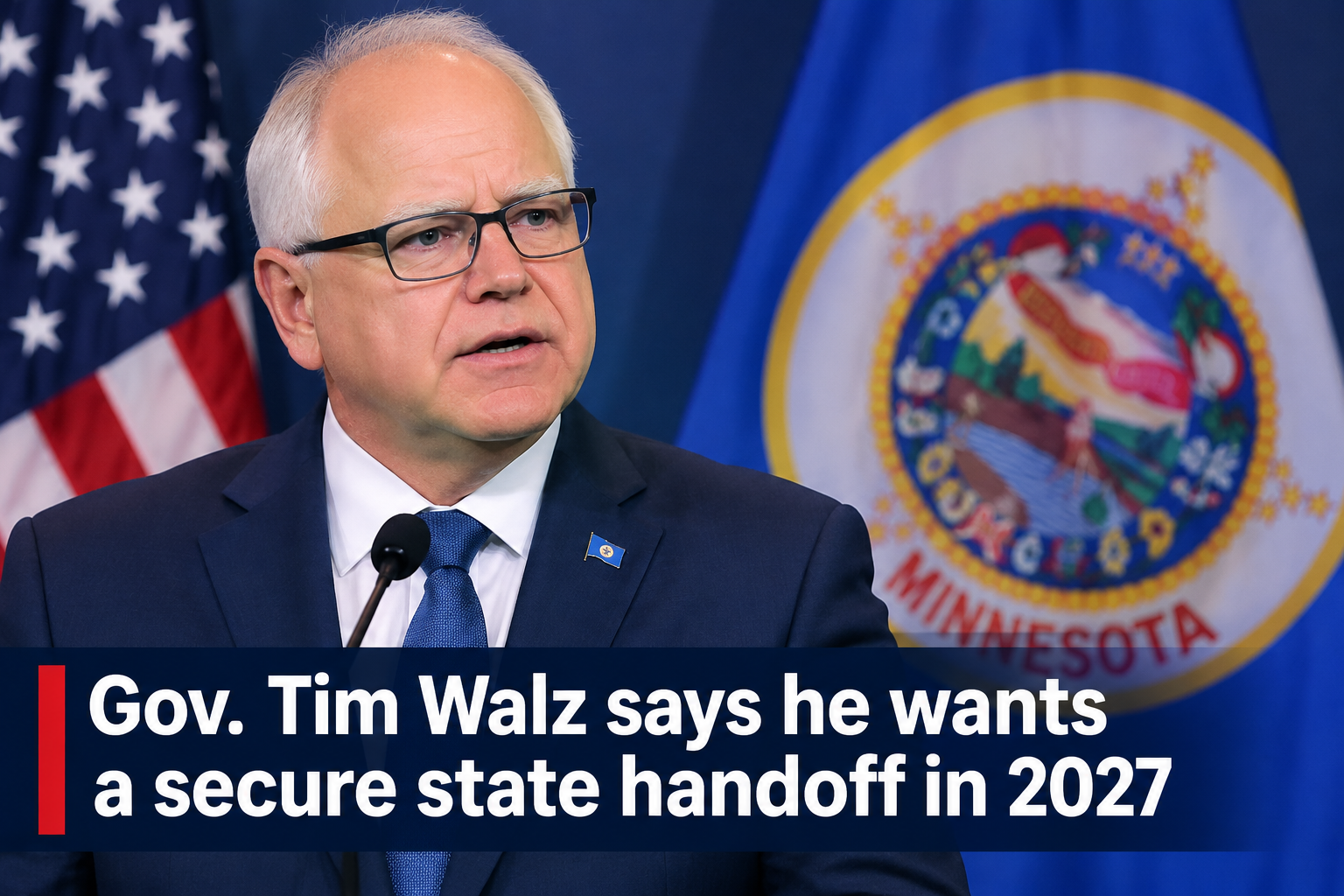
ST. PAUL, Minn. - Minnesota Gov. Tim Walz is turning his attention toward the final months of his administration following the 2026 midterm elections, emphasizing government accountability, economic stability and the importance of leaving the state in a strong position for its next leaders.
Walz, who chose not to seek a third term as governor, said Thursday that his remaining time in office will focus on strengthening oversight of state programs, supporting Minnesota's economy and ensuring a smooth transition when a new administration takes office in January 2027.
The governor described his goal as handing over a strong, secure state government capable of continuing the work his administration has pursued.
Government oversight remains a top priority
One of the central issues Walz addressed was fraud involving public programs, an issue that has drawn significant attention across Minnesota.
Walz acknowledged that taxpayer money had been stolen and defended his administration's efforts to investigate wrongdoing and hold those responsible accountable.
“The fact of the matter here is people stole from Minnesotans,” Walz said. “We caught them, we put them in jail, and we continue to do so.”
His comments highlighted the importance of maintaining strong safeguards around public funding as state officials prepare for a change in leadership.
Walz indicated that improving program oversight will remain a priority during his final months, with the goal of leaving the next governor and legislature better positioned to protect public resources.
The issue of government accountability is expected to remain an important topic as Minnesota's newly elected leaders prepare to take office.
Walz encourages next leaders to continue key programs
Beyond government oversight, Walz expressed hope that the next administration and state legislature will continue policies he believes have benefited Minnesota families.
Among those initiatives is Minnesota's free school meals program, which provides eligible meals to students at participating schools without charging families.
Walz pointed to “feeding children” as an example of the work he wants future state leaders to preserve.
He also highlighted paid family and medical leave, a major policy initiative intended to provide financial support to eligible workers who need time away from their jobs for qualifying family or medical reasons.
For Walz, the continuation of these programs represents an opportunity for Minnesota to build on policies established during his administration rather than reverse course with a change in political leadership.
However, decisions about future funding, oversight and possible adjustments will ultimately rest with the incoming governor and state lawmakers.
Economic growth and medical technology investment
Walz also emphasized Minnesota's economic future, particularly its medical technology industry and the state's efforts to attract international investment.
Minnesota has long been recognized as a major center for medical device manufacturing, healthcare innovation and related technology development.
Walz said his administration has worked to strengthen international business relationships and encourage foreign companies to invest in the state.
“We’ve really done a lot reaching out and getting foreign investment now,” Walz said. “For example, Japan is now our largest direct foreign investment.”
The governor presented those relationships as an important part of Minnesota's long-term economic strategy.
Foreign investment can help support business expansion, research partnerships and employment opportunities, particularly in industries where Minnesota already has an established presence.
Walz suggested that maintaining a competitive business environment and encouraging continued investment will be essential responsibilities for the state's next generation of leaders.
Governor hopes to return to teaching after leaving office
While much of Thursday's discussion focused on Minnesota's future, Walz also offered a glimpse into his personal plans once his time as governor ends.
Before entering politics, Walz worked as a public school teacher, a career he has frequently referenced throughout his political life.
Now, as he prepares to leave the governor's office, he says education may once again become his focus.
“My hope isn’t too long after that, I’ll be teaching again,” Walz said. “I think that’s what I want to go do.”
The comments suggest Walz is considering a return to the classroom rather than immediately pursuing another political position.
He did not provide details about where he might teach or what type of teaching role he would pursue.
A transition that will shape Minnesota's future
With the 2026 elections behind him and his departure approaching, Walz faces the task of preparing state agencies and programs for new leadership.
His final months will provide an opportunity to address remaining administrative priorities, reinforce government accountability and promote economic continuity.
The incoming administration will inherit both the programs Walz has championed and the challenges surrounding public spending, oversight and Minnesota's broader economic outlook.
For Walz, the goal is to leave behind a government that can continue functioning effectively regardless of who occupies the governor's office.
As January 2027 approaches, attention will increasingly shift toward how Minnesota's next leaders choose to maintain, modify or replace the policies established during his administration.
For now, Walz says his focus remains on finishing his term with a strong state government and a stable foundation for the future.