This material may not be published, broadcast, rewritten, or redistributed. ©2026 Twincitieslocalnews - local news, local sports

Thursday, November 19, 2026
By MN Newswire staff
Published: September 23, 2026 2:32pm
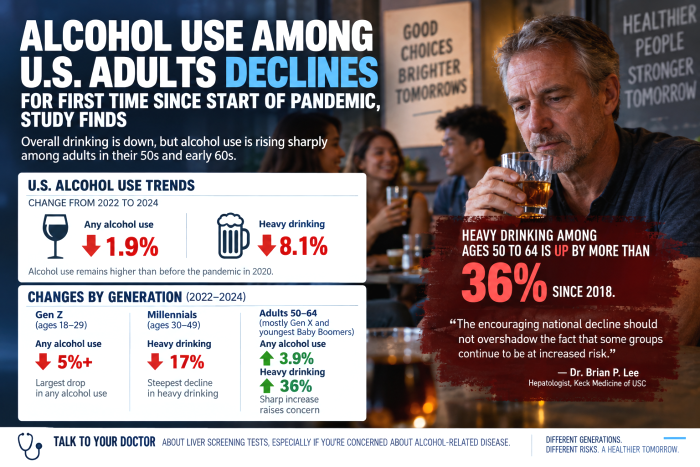
Alcohol use among American adults has declined for the first time since the start of the COVID-19 pandemic, according to a new study, but researchers say one age group is moving sharply in the opposite direction.
The study, published in the Annals of Internal Medicine, found that overall alcohol use among U.S. adults fell by nearly 2% between 2022 and 2024. Heavy drinking declined by more than 8% during the same period.
Despite those decreases, researchers found alcohol use remains higher than it was before the COVID-19 pandemic began in 2020.
The research was led by Dr. Brian P. Lee, a hepatologist and liver transplant specialist at Keck Medicine of USC in Los Angeles. Researchers analyzed National Health Interview Survey data from more than 114,000 U.S. adults between 2018 and 2024.
Younger adults see biggest declines
The decline in drinking was not evenly distributed across age groups.
Adults ages 18 to 29, largely representing Generation Z, experienced the largest decline in any alcohol use, falling by more than 5%.
Among adults ages 30 to 49, heavy drinking dropped by 17% between 2022 and 2024 — the largest decrease among the age groups examined.
Researchers did not determine exactly what caused the changes. However, they pointed to several possible factors, including the growing sober-curious movement, increased awareness of alcohol-related health risks and some people substituting cannabis for alcohol.
Drinking rises sharply among adults 50 to 64
While younger Americans are drinking less, researchers found a significantly different trend among adults ages 50 to 64, a group consisting largely of Generation X and younger Baby Boomers.
Heavy drinking among adults in that age range increased by more than 36% between 2018 and 2024. Overall alcohol use among the group also increased by nearly 4%.
Researchers said the increase is particularly concerning because the health risks associated with alcohol can become greater as people age.
“The encouraging national decline should not overshadow the fact that some groups continue to be at increased risk,” Lee said in a Keck Medicine article. “Heavy drinking among ages 50 to 64 is up by more than a third since 2018.”
The average age of a cirrhosis diagnosis is in the 50s, according to the researchers, and alcohol is now the leading cause of liver transplants in the United States.
Researchers call for targeted prevention
The findings suggest that a one-size-fits-all approach to reducing alcohol-related harm may not be enough.
“These findings suggest that alcohol prevention efforts need to become more tailored to specific populations,” Lee said. “Different groups are showing different patterns of alcohol use, and understanding those differences could help us develop more effective prevention and treatment strategies.”
For people concerned about alcohol-related health problems, Lee recommended speaking with a doctor about liver screening tests that may help identify potential problems earlier.
Researchers said the overall decline in drinking is encouraging, but the substantial increase in heavy alcohol use among adults approaching retirement age shows that significant health concerns remain.